In today’s online world, website speed is not just a “technical parameter” but a direct contributor to revenue. Users expect instant responses: if a page takes longer than 2–3 seconds to load, the bounce rate increases sharply. A slow site lowers conversions, worsens SEO, and undermines brand trust. The good news — most problems are predictable and fixable. Below are the five main reasons for slow performance and clear steps to fix them on VPS.
Tag: VPS Page 3 of 4
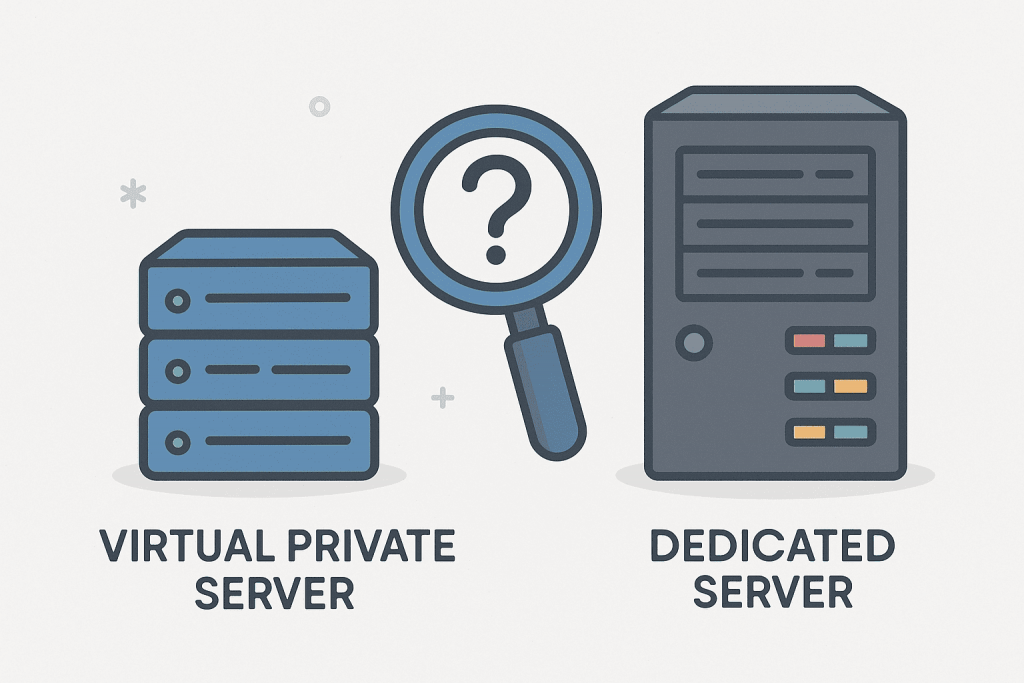
Today, businesses increasingly depend on online services: corporate websites, e-commerce stores, SaaS platforms, and data processing systems. Reliable infrastructure has become not just an advantage but a basic condition for success. One of the most stable solutions for hosting and deploying projects remains the dedicated server.
In this article, we will explain what a dedicated server is, how it differs from VPS and shared hosting, and what tasks it is best suited for.
Modern businesses increasingly adopt microservice architecture using Kubernetes to manage containerized applications. However, as complexity grows, so does the need for a reliable backup system—not only for configurations but also for persistent data. This becomes especially important when the Kubernetes cluster is deployed on a VPS, where the administrator is fully responsible for infrastructure protection.
In today’s world, where speed and flexibility in managing IT infrastructure determine business competitiveness, automation has become a key tool for DevOps teams. One of the most effective approaches is Infrastructure as Code (IaC).
IaC allows you to define infrastructure in the form of code and automatically deploy it in cloud environments, data centers, or on dedicated servers. In this article, we will explore how to use Terraform and Ansible to automate the deployment of VPS and physical servers, and how this approach simplifies infrastructure management and scaling.
Modern tasks in machine learning, artificial intelligence, and computer graphics require enormous computational resources. Traditional CPU‑based servers are no longer always able to efficiently handle large volumes of data and complex algorithms. This is where GPU (Graphics Processing Unit) and VPU (Vision Processing Unit) come into play, significantly accelerating computations. When these technologies are combined with Virtual Private Servers (VPS), you can build a powerful and flexible infrastructure without heavy capital investment.
Containerization has revolutionized the way applications are deployed, making the process more flexible, scalable, and manageable. Kubernetes, as the leading container orchestration system, has become the standard for running cloud-native services. However, as the number of services and microservices grows, so does the need for efficient monitoring. This is why the combination of Prometheus + Grafana has become the go-to solution for observing infrastructure health.
In this article, we’ll explore how to set up Kubernetes cluster monitoring on a VPS using Prometheus and Grafana, the benefits of this approach, and why it’s essential for maintaining project stability.
Reliable backup is a critical part of any modern IT infrastructure. For VPS owners, physical server administrators, or cloud environment users—where every failure can cost a business money, reputation, or even complete data loss—implementing an automated backup system is not a luxury, but a necessity. In this article, we’ll explore how to build a flexible and reliable backup backend using Proxmox, BorgBackup (BorgArchive), and rclone.
Continuous Integration and Continuous Deployment (CI/CD) is a cornerstone of modern development workflows. It automates code testing, building, and deployment, enabling faster releases, fewer errors, and more stable products. When using a VPS, you gain full control over your infrastructure, making your CI/CD process even more flexible and efficient.
WordPress is one of the most popular CMS platforms in the world, powering over 40% of all websites. It’s easy to manage, has a vast ecosystem of plugins and themes, but as traffic grows, it requires stronger technical resources. If you’re planning to scale your project or already experience slowdowns during traffic spikes, it’s time to switch to a VPS for WordPress.
In this article, we’ll explain how to properly configure a virtual server for WordPress to ensure stability, security, and high performance even during peak loads.
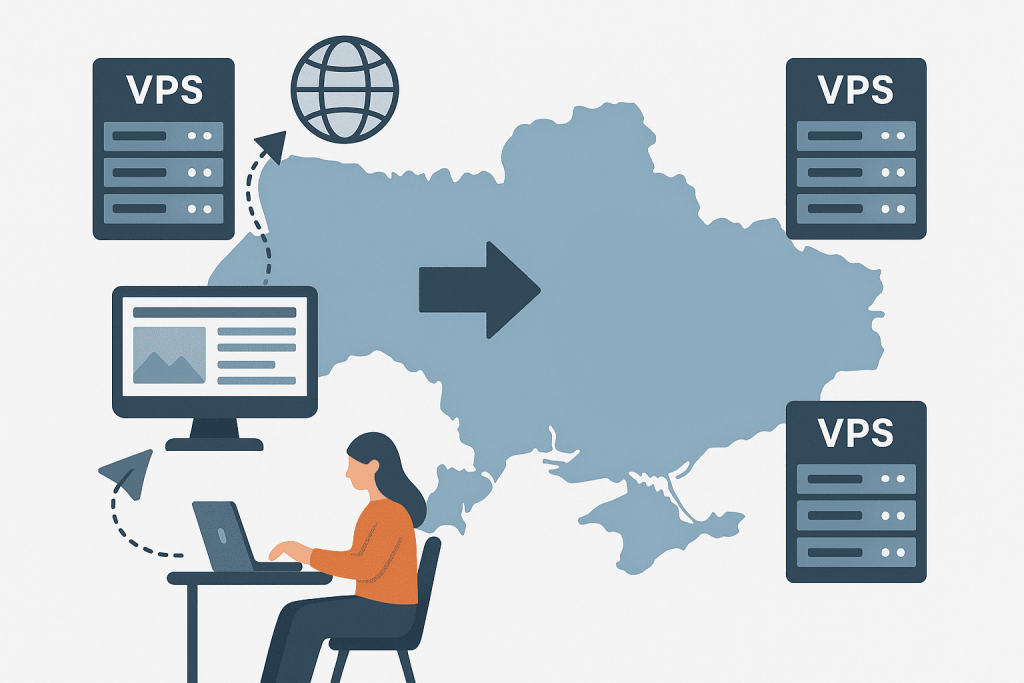
Migrating a website to a new server is a responsible task that requires a clear plan, especially when it comes to business sites, where even a few minutes of downtime can result in lost profits, traffic, or reputation. In this article, we’ll explore how to transfer a site without data loss, with minimal or zero downtime, and which tools and services can help you through the process.