
Category: Uncategorized Page 1 of 3

Will cables disappear as the foundation of the internet

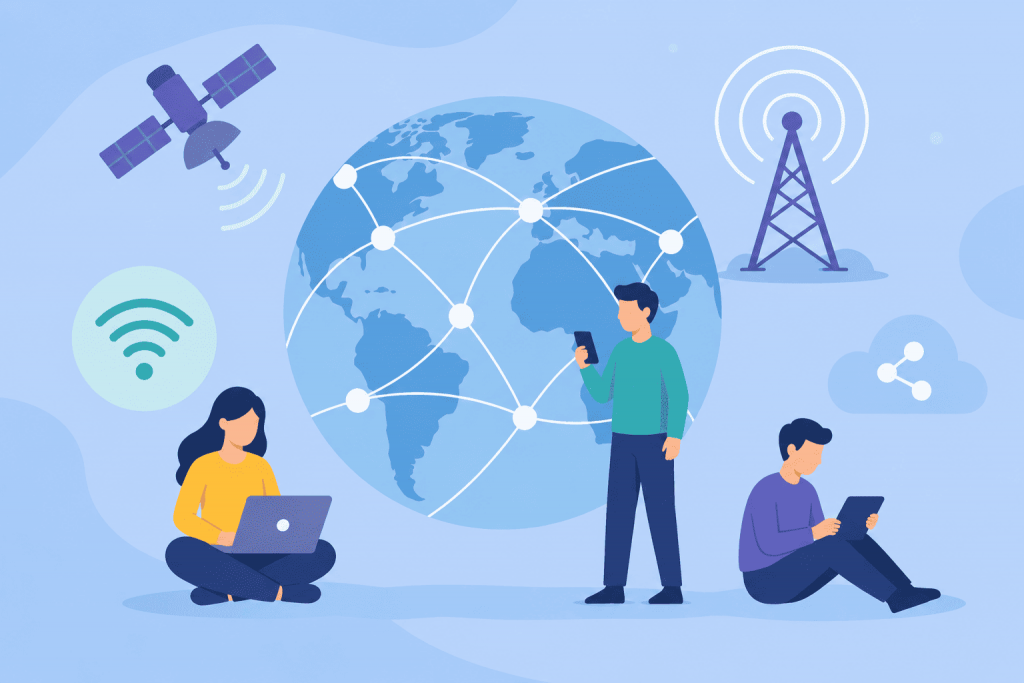
Comparison of underwater internet cables and wireless data transmission via satellites and communication networks.
Communication technologies are gradually moving beyond physical limitations

The global network today rests on glass and polyethylene. When we talk about the internet, we are not talking about the air, but about very concrete fiber-optic highways lying on the ocean floor. These threads pump enormous volumes of traffic – from banking transactions to datasets used to train neural networks. Optics wins because of physics: a light pulse inside the fiber provides the stability and speed that no wireless technology can yet deliver over long distances.

How changes in the server segment reach everyday users

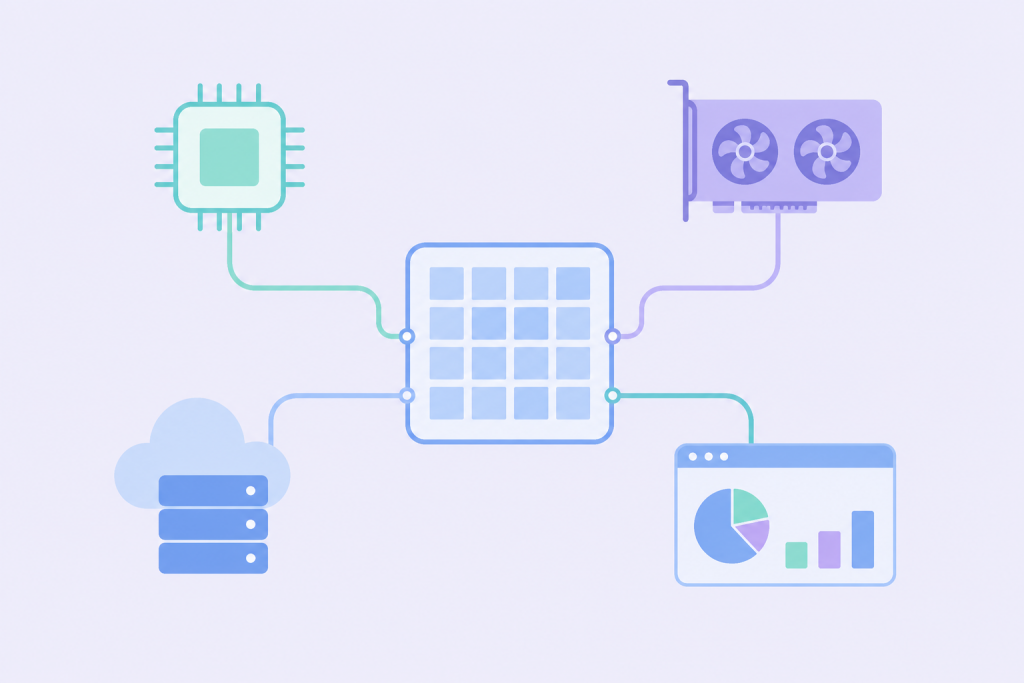
Servers, cloud with data streams and arrows leading to devices and users.
Changes in infrastructure that are felt in the cost of services over time

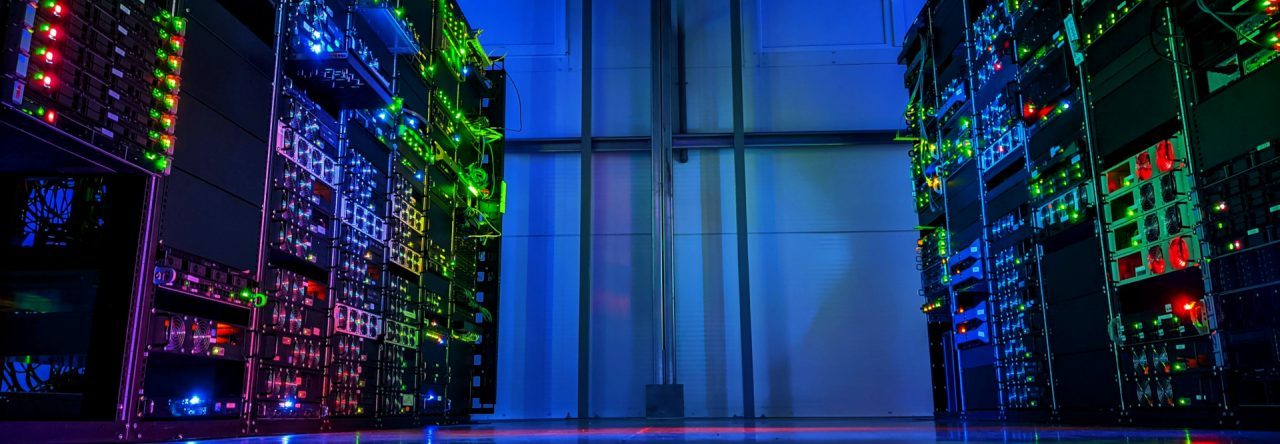
When a website opens instantly and a banking app doesn’t “freeze” during a transaction, users tend to take it for granted. Yet behind every request there is a rack in a data center, filled with servers, switches, and storage systems. What happens inside these sealed rooms – from chip shortages to shifts in logistics chains – inevitably rolls down to the end user. The only question is how quickly infrastructure costs for providers turn into subscription prices or affect the speed of a service.

Partial delegation of work to artificial intelligence is becoming a new standard

A person at a laptop and a robot at a computer, with an arrow between them showing the transfer of tasks.
Gradual change in work processes

Today discussions about artificial intelligence are gradually moving out of the “will it replace or will it not” debate into the sphere of practical task management. In practice we are not seeing mass disappearance of professions, but a redistribution of roles. AI becomes another tool in the stack, to which the technical part is delegated, while architectural oversight and responsibility for the final release remain with a human.

How identity impersonation looks online and why it is difficult to recognize

A user at a laptop between two masks symbolizing fake and real digital identities, with signs of online communications.
Identity theft masquerades as normal online activity

Identity impersonation online has long moved beyond primitive fake accounts. Today it is a refined mechanism where technology only frames a precise analysis of open data. A person on the internet exists as a digital construct – a set of photos, contacts, and communication habits. It is this image that has been learned to be copied so convincingly that the boundary between a real profile and its duplicate becomes almost imperceptible.

Why a website opens from some countries and does not open from others

Two users at laptops: on the left, the person successfully opens a site with a green check mark and a globe, on the right, the user sees an access error with a red background, a prohibition icon, and a warning about no connection.
The availability of web resources depends not only on the site, but also on the user’s geography and network restrictions.

The internet is often perceived as a global space without borders, where any website is accessible from anywhere in the world. In practice, things work differently. A user may open a website without any issues from Ukraine, Poland, or Germany, but receive an error or no access at all from another country. For many people this seems strange or even alarming, although in most cases the reason lies not in the website itself, but in how internet infrastructure and servers are built and operated.

How the Growth of Data Transfer Speeds Is Changing Modern Devices

Three cables with different connectors placed side by side: on the left is a connector with the inscription GPMI, in the center is USB-C, on the right is HDMI 2.2, which visually compares modern connection standards.
Changing interfaces as a reflection of the growing demands for speed and versatility of connections

Just a few decades ago, data transfer was a secondary characteristic of technology. Users were more concerned with whether a device could connect to a computer at all and whether files could be copied without errors. Today, the situation is completely different. Data transfer speed has become one of the key factors defining the capabilities of smartphones, laptops, televisions, and even everyday accessories. It affects how fast a device charges, what video quality it can play, and how comfortable it is to work with large volumes of information.

How to Read Website Errors in Simple Terms

Two people stand in front of a screen with the words Error 404 Page Not Found, next to which is a construction crane, warning signs, and error icons symbolizing a problem with accessing the website page.
Site errors as signals that help you understand what went wrong

While browsing websites, users often encounter messages like 404, 500, or 504. For most people, these numbers look like technical gibberish, even though they actually carry quite clear information. Website errors are the way a server tells the browser what exactly went wrong. If you learn how to interpret them correctly, it becomes clear whether the problem is on your side, whether you just need to wait, or whether the site is experiencing serious technical issues.

How Artificial Intelligence Is Gradually Replacing Familiar Software

An artificial intelligence robot works at a laptop, surrounded by icons of code, music, design, video, analytics, and copywriting, symbolizing various digital tasks.
Universalization of tools as a new stage in the development of digital services

Just a few years ago, the digital lives of most people consisted of dozens of separate applications. Asana or Monday were used for task planning, GitLab for working with code, Wix for building websites, Duolingo for online learning, and specialized support platforms for working with clients. Each program performed a narrow function, and this was considered a normal model of computer use. Today, this logic is gradually changing. Artificial intelligence is taking over more and more tasks that previously required separate programs, and it does so within a single universal environment.

Physical Artificial Intelligence as a New Stage of Technological Development

An autonomous taxi with a robot driver at the wheel is driving along a city road, with houses, pedestrians, and city infrastructure depicted nearby.
When digital systems begin to interact with the environment without human intervention

Until recently, artificial intelligence was perceived mainly as a software technology. It analyzed texts and images, helped with information search, or automated routine digital tasks. Today, however, AI is rapidly moving beyond screens and beginning to operate in the physical world. This shift became clearly visible after recent statements at technology exhibitions, where it was demonstrated that artificial intelligence is transitioning from a supporting tool to an active participant in real-world processes.

Programmers’ Day Becomes an Official Holiday in Ukraine

Programmer's workplace with computer, code on screen and digital infrastructure elements.
Official recognition of the professional day of software development specialists

On January 7, Ukraine celebrates Programmers’ Day at the state level for the first time. This is a new professional holiday that received official status at the end of last year and is dedicated to specialists in the field of information technology. Its introduction became a logical step given the role of the IT industry in the country’s modern life and its impact on the economy, security, and the development of digital services.

Page 1 of 3

-->