
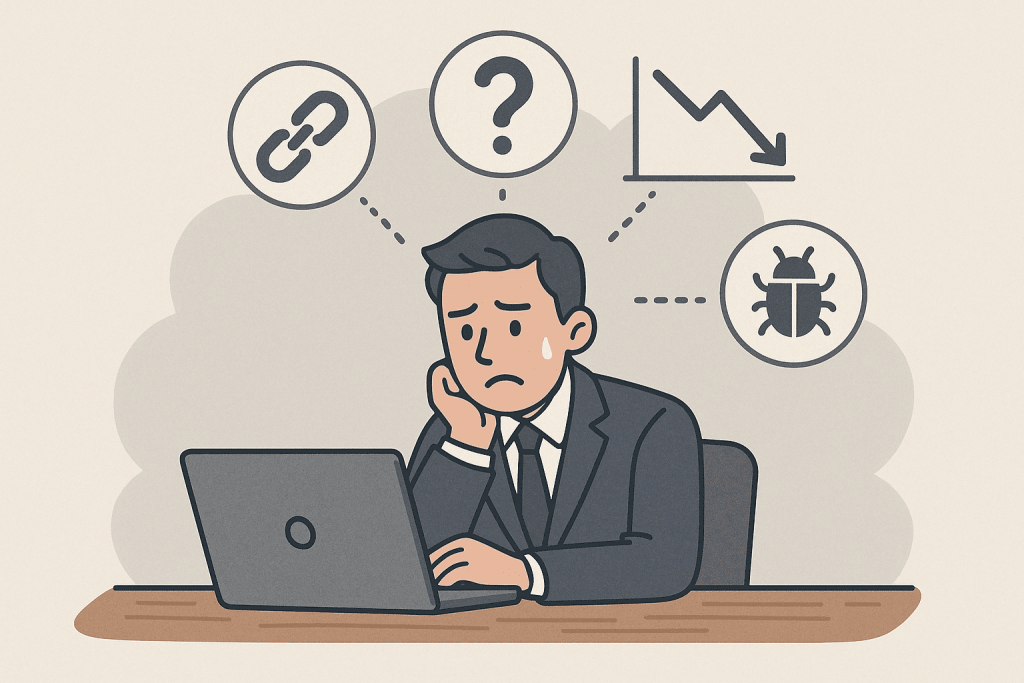
The transition of a business to the online space stopped being a fashionable trend long ago — today it is a necessity for survival and growth. However, even companies with offline sales experience often repeat the same mistakes that complicate the launch or slow down development. The online environment has its own rules, where technical stability, user convenience, and understanding of digital tools become crucial. To avoid unnecessary expenses and losing customers, it is worth understanding which mistakes businesses most often make during digitalisation and why they become critical.
Poorly planned technical infrastructure as a root of problems
Many companies begin by launching a website on a cheap or random hosting provider, without considering the load and future growth. At early stages, this seems like reasonable savings, but as traffic increases, resources get overloaded, pages load slowly, or the site crashes entirely. Such failures are especially critical during advertising campaigns or seasonal sales, when every minute of downtime means real financial losses. A technical foundation built “anyhow” quickly becomes a bottleneck for the entire project. This is why it is important to consider server parameters, data storage type, security level, and scalability options even before launch.
Ignoring user experience and UX principles
Businesses often believe that if the site works, that is enough. In reality, the user experience (UX) determines whether a person will stay on the page and complete the desired action. Confusing navigation, too many steps to checkout, lack of mobile responsiveness, intrusive ads, or slow registration forms drive away part of the audience within the first seconds. UX is not about beauty — it is about convenience and simplicity. A user should intuitively understand how to find information, check a product, place an order, or contact support. If this is missing, businesses lose customers without even noticing at which stage they disappear.
Underestimating content and brand communication
Online presence is impossible without content, yet many companies treat it as secondary. An inconsistent style, lack of a clear value message, irregular publications, or copied texts from other sources create an impression of unreliability. Customers trust brands that speak clearly, professionally, and authentically. Content is not just text — it is part of the company’s image. It should convey expertise, help users, and reflect the brand’s character. For online stores, high-quality product descriptions, photos, reviews, and helpful articles are critical. For service companies, a well-structured website and clearly explained advantages are essential.
Lack of a clear promotion strategy
Some businesses believe that a website will automatically start bringing customers after launch. But without SEO, analytics, advertising, social media, and content marketing, online presence remains invisible. SEO is the optimisation of a website for search engines, allowing it to appear in Google results for customer queries. Analytics provides understanding of which pages perform well and which repel visitors. Social media builds loyalty and trust, while advertising drives traffic and sales. Businesses that do not use these tools comprehensively usually spend more and get fewer results. A digital strategy is not a one-time action but an ongoing process that must be adjusted based on data and user behaviour.
Ignoring security and data privacy
The online environment imposes new obligations: it is necessary to protect data, ensure a secure connection, and comply with legal requirements. Companies often underestimate these aspects or postpone them, creating vulnerabilities. Lack of an SSL certificate, weak passwords, unreliable backup systems, absence of attack monitoring — all this can lead to data loss or reputation damage. A single security incident can cost far more than any preventive technical work.
Overestimating internal resources and lack of technical support
Businesses often believe they can handle technical issues on their own, even if the team lacks specialised expertise. As a result, small technical problems remain unresolved, updates are delayed, and critical errors accumulate. Professional support helps avoid downtime, respond quickly to traffic load, and ensure stable operation. This is especially important during peak sales or active advertising, when a failure can cost thousands of hryvnias.
Conclusion
To successfully move online, a business must think strategically and consider the technical foundation on the same level as marketing or content. The right choice of server infrastructure and reliable hosting helps avoid most common problems — from website crashes to data loss. Server.UA offers VPS and dedicated servers that ensure stability, scalability, and a high level of security required for modern online projects.
Leave a Reply
You must be logged in to post a comment.