
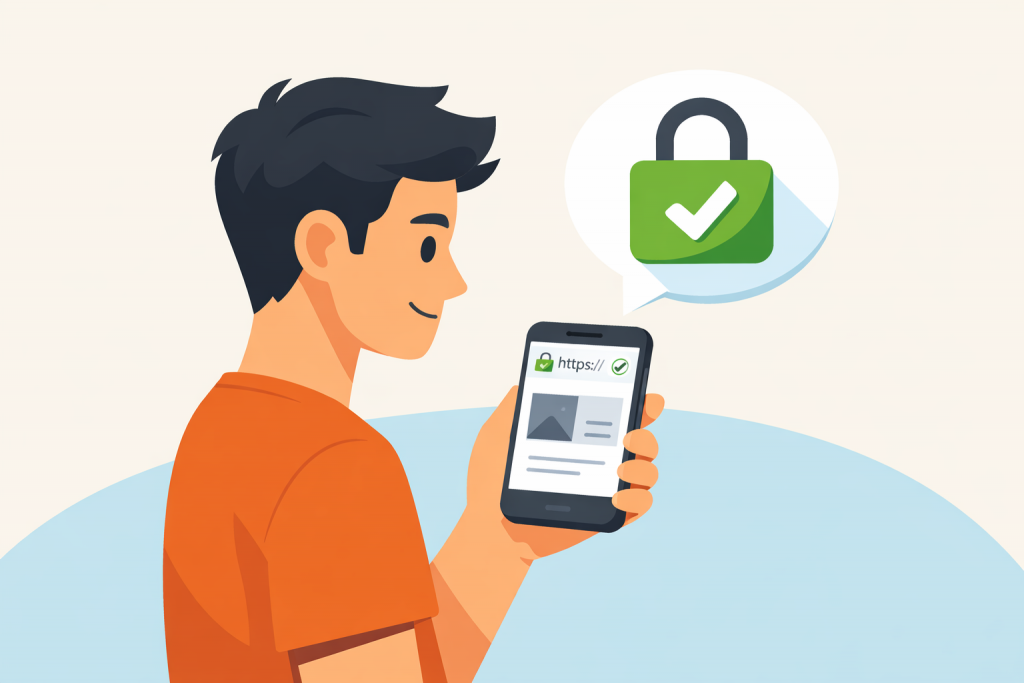
Mobile internet has become the main way millions of people access websites. A smartphone is always at hand: people read news, place orders, log into banking services and personal accounts from it. In this format of interaction, security stops being an abstract technical concept and directly influences user behavior. An SSL certificate in the mobile environment performs several important roles at once, which often go unnoticed but determine whether a person will trust a website and continue using it.
Why Mobile Users Are More Sensitive to Security
A mobile user is almost always in conditions of a changing connection. This can be a mobile network, public Wi-Fi, or an unstable signal while on the move. In such conditions, the risk of data interception is much higher than it seems. An SSL certificate encrypts the information that the browser transmits to the server, making it inaccessible to third parties. For the user, this means that even in an open network, their passwords, messages, and payment data remain protected.
How SSL Affects the First Impression of a Website
On a smartphone, decisions are made faster. The screen is smaller, attention is scattered, and any sign of danger is perceived sharply. If the browser shows a warning about an unsecured connection or hides the page due to the absence of SSL, most users simply close the website. The presence of a certificate, on the contrary, creates a sense of reliability even before a person starts reading the content or interacting with forms.
Protection of Personal Data on a Smartphone
A smartphone is a device that contains a large amount of personal information. Automatic logins to services, saved passwords, payment cards, access to email and social networks make mobile devices especially vulnerable. An SSL certificate protects the data transmission channel between the website and the browser, reducing the risk of information leakage during authorization, registration, or payment. For a mobile user, this means fewer chances of losing control over their data.
The Impact of SSL on Website Speed and Stability
There is a common belief that a secure connection slows down a website. In reality, modern encryption technologies are optimized for fast data transmission. Many protocols that speed up page loading work only over HTTPS, that is, with the use of SSL. For mobile internet, where speed can vary depending on coverage and network load, this is especially important. A secure website often works more stably именно on smartphones.
The Role of SSL in Mobile Services and Applications
Many mobile applications interact with the server through the same addresses as websites. If SSL is configured incorrectly or is absent, the application may work with interruptions or not connect at all. Mobile operating systems are gradually increasing security requirements, and unsecured connections are increasingly blocked at the system level. In such a situation, SSL becomes a necessary condition for the stable operation of a service.
User Trust and Willingness to Interact with a Website
On a smartphone, people are less willing to risk entering personal data. If a website causes even the slightest doubt, a user is more likely to close the tab than try to figure it out. The presence of an SSL certificate reduces these doubts. A secure connection is subconsciously perceived as a sign of the website owner’s serious attitude toward the security of their visitors.
Why SSL Has Become Mandatory for Mobile Internet
Mobile internet combines speed, convenience, and increased risks. That is why an SSL certificate has ceased to be an optional feature and has become a basic standard. It affects not only technical security but also trust, user behavior, and service stability. For a mobile audience, SSL is an invisible but critically important element, without which a modern website simply cannot exist.
Leave a Reply
You must be logged in to post a comment.