
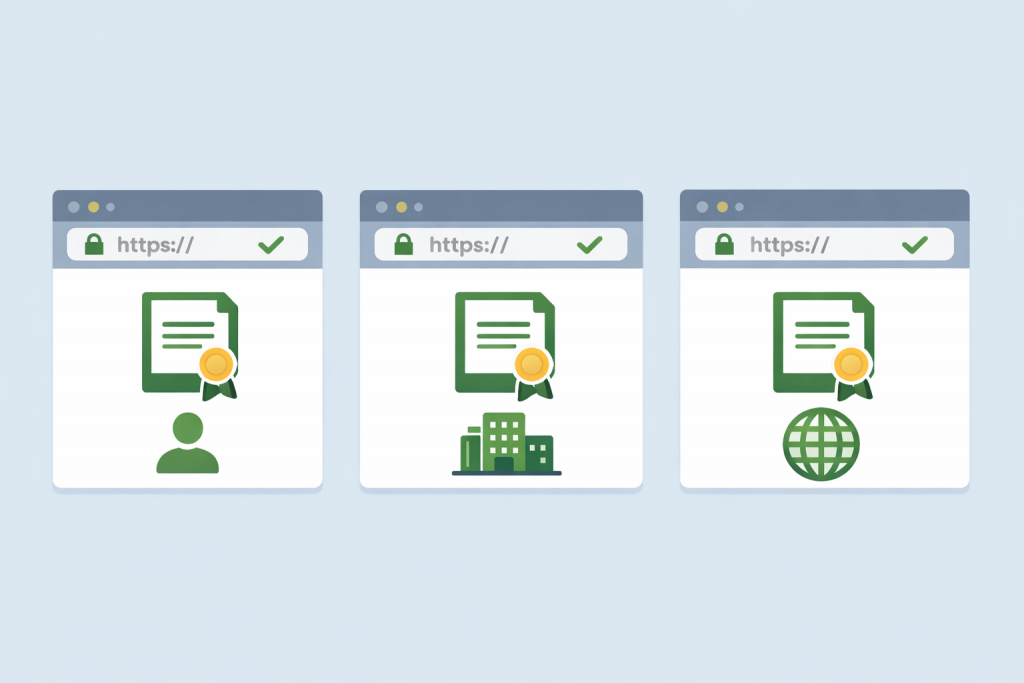
An SSL certificate works like a digital passport for a website. It doesn’t just “enable” encryption – it creates a secure tunnel through which passwords, card details, or personal messages travel from the browser to the server as a chaotic set of characters. Intercepting them in this state is technically possible, but reading them is not. The user sees the result of this process as a lock icon in the browser, while the site owner gains the loyalty of search engines, which давно have made SSL a mandatory technical standard.
Who issues certificates and whether brands matter
Certificates are issued by certification authorities (CAs). In practice, a common question arises: how is something like Sectigo or DigiCert better than free alternatives. The encryption algorithms are roughly the same everywhere, but the difference lies in reputation and the level of support. Large authorities such as RapidSSL or GeoTrust have spent years building trust with browser developers. For a small blog, the brand doesn’t matter much, but for a large corporation it is important to have a certificate from a provider whose name is included in global trust lists.
Single domain protection and working with subdomains
The most common scenario is a certificate for a single address. It covers the main site name (for example, both with and without www). This is a basic solution for landing pages or simple business cards. However, if you plan to move a store to a separate address or create a mail service, such an SSL will no longer work there.
For more complex projects, there are Wildcard certificates. With a single file, you can protect the main domain and an unlimited number of first-level subdomains. This significantly simplifies the administrator’s life: instead of renewing ten different certificates each year for a blog, forum, and user accounts, only one needs to be managed.
When there are multiple domains
Sometimes a company has several different websites, and managing the security of each separately becomes inconvenient. Multi-domain solutions allow you to include an entire list of completely different addresses in a single certificate. This is often used in large infrastructures, where network nodes are spread across different zones but must operate under a unified security center.
Validation levels: from automation to legal audit
The simplest path is domain validation (DV). No one asks for your documents here; the certification authority only needs confirmation that you have access to the site’s settings. This takes a matter of minutes. Such an option is ideal for informational resources, where the main goal is simply to “hide” traffic from outside observers.
If the site processes payments or stores sensitive customer data, it’s better to choose organization validation (OV). In this case, specialists from the certification authority verify the actual existence of the business through registries. The certificate details will include your organization’s name, which becomes a meaningful signal for a внимательный user.
The highest level is extended validation (EV). This is a full audit of the legal entity. Although modern browsers no longer highlight the address bar in green, EV status remains a marker for banks and large payment systems. When the cost of error is high, companies are willing to go through complex checks to confirm their legitimacy at the highest level.
How to make the right choice
The choice of SSL depends on how critical public trust is for your brand. If you run a personal blog or a small portal, domain validation will be enough. But as soon as a shopping cart or user account appears on the site, it’s worth considering corporate levels of protection. This is not just a technical detail – it is the foundation on which a site’s operation in the modern web depends.
Leave a Reply
You must be logged in to post a comment.