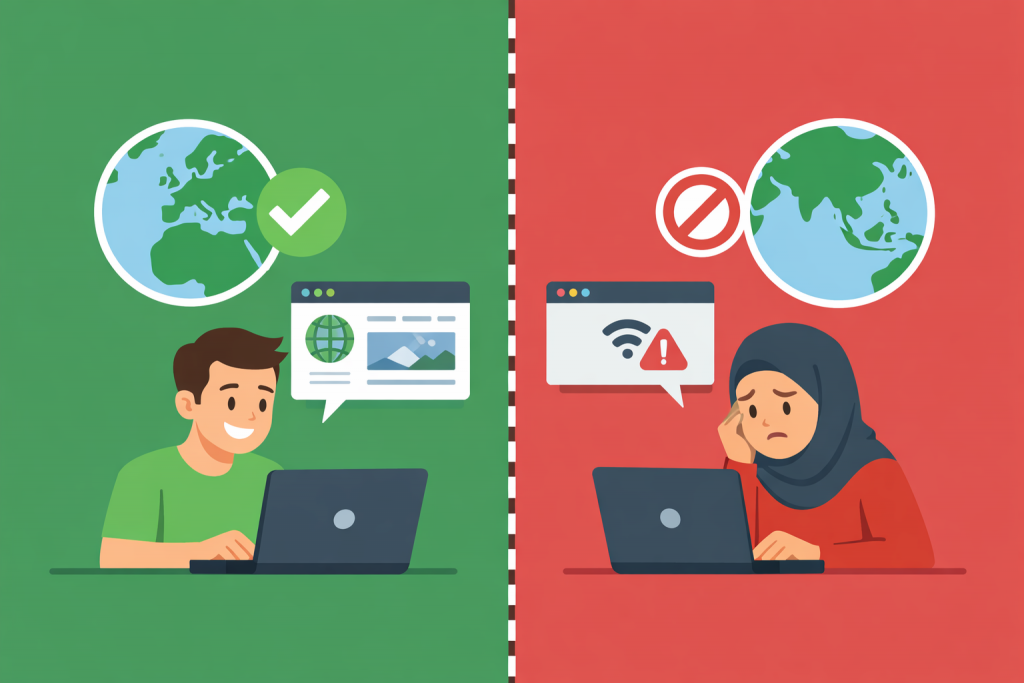
The internet is often perceived as a global space without borders, where any website is accessible from anywhere in the world. In practice, things work differently. A user may open a website without any issues from Ukraine, Poland, or Germany, but receive an error or no access at all from another country. For many people this seems strange or even alarming, although in most cases the reason lies not in the website itself, but in how internet infrastructure and servers are built and operated.