
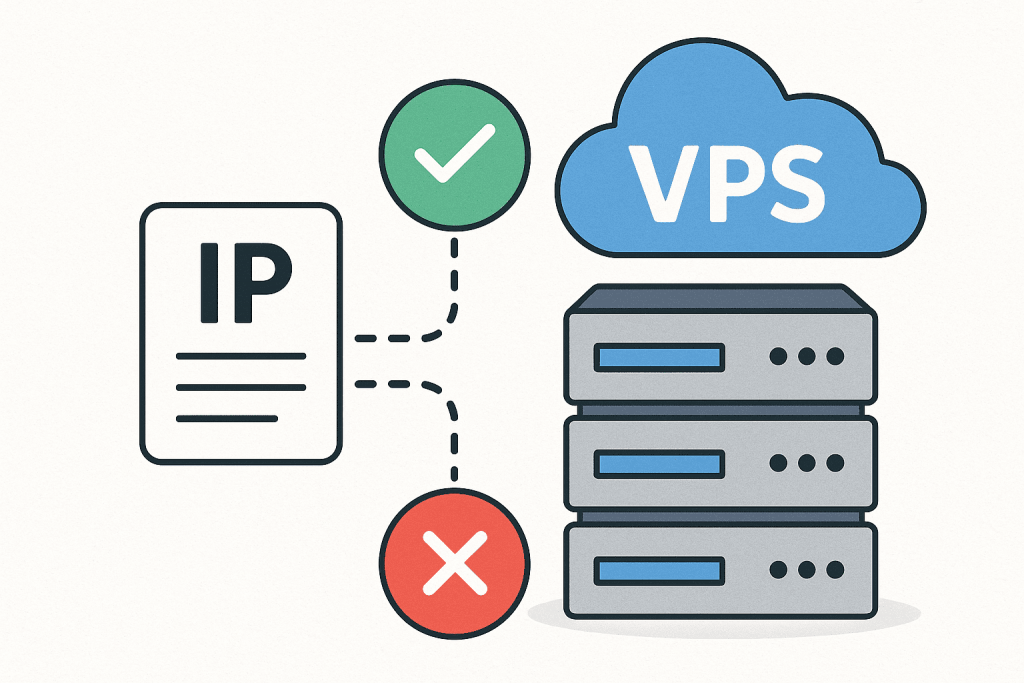
When a website, mail server, or API runs on a VPS, it receives its own IP address — a unique numerical identifier on the network. For internet services, this address has its own reputation, similar to a company’s business reputation. IP reputation is formed based on the server’s behavior: what requests it sends, which services run on it, and whether spam, phishing, or other suspicious activity is detected from it. A poor IP reputation can result in emails not reaching recipients, websites being blocked by browsers, and external services refusing to work with it.
On a VPS, this issue is especially important because full responsibility for the use of the IP address lies with the server owner. Even if the infrastructure itself is stable, configuration mistakes or careless actions can quickly damage the reputation.
How IP Reputation Is Formed
IP reputation is formed automatically by various anti-spam systems, mail services, and security systems. They analyze traffic coming from the IP address, request frequency, message types, and user reactions. For example, if a server sends large volumes of emails that users mark as spam, the IP reputation begins to deteriorate. The same applies to password brute-force attempts, participation in DDoS attacks, or hosting infected websites.
It is important to understand that reputation is not permanent. It can both worsen and gradually recover if the server starts behaving correctly and predictably.
Typical Causes of IP Reputation Issues on VPS
One of the most common causes is incorrect mail server configuration. Without specific DNS records such as SPF, DKIM, and DMARC, emails sent from a VPS appear suspicious to mail systems. Another problem is compromised websites or scripts that begin sending spam without the server owner’s knowledge. This often happens due to outdated software or weak passwords.
Reputation is also negatively affected by excessive activity from services that perform automated requests, such as parsers or bots. If they operate without limits, the IP may be perceived as a source of suspicious traffic. In some cases, issues arise due to the history of the IP address, if it was previously used for unwanted activities.
How to Properly Protect a VPS from Reputation Degradation
First of all, it is necessary to ensure basic server security. Regular updates of the operating system and software reduce the risk of compromise. Strong passwords and restricted access to administrative panels protect against unauthorized use of the VPS. It is also important to monitor which services are running on the server and what kind of traffic they generate.
For mail services, it is critical to correctly configure DNS records that confirm the server’s right to send emails on behalf of the domain. This signals to mail systems that the messages are legitimate. In addition, it is useful to gradually increase mailing volumes rather than sending a large number of emails immediately from a new IP.
Reputation Monitoring and Early Detection of Problems
Monitoring IP reputation is not a one-time action but an ongoing process. There are dedicated services and blacklists that show whether an IP address has been blocked. Regular checks make it possible to quickly notice a problem and take action before it begins to affect website or email operation.
It is also worth paying attention to indirect signals such as reduced email delivery, an increase in connection errors, or user complaints. The earlier a problem is detected, the easier it is to resolve without long-term consequences.
Restoring IP Reputation in Case of Problems
If an IP address already has a poor reputation, there is no need to panic. In most cases, the situation can be corrected. To do this, it is necessary to eliminate the root cause of the problem, stop suspicious activity, and ensure that the server is operating properly. After that, the reputation will gradually begin to recover as security systems register positive changes in the IP’s behavior.
In some cases, it makes sense to contact the hosting provider or specialized services that help clean up reputation. This is especially relevant for business projects where stable email and service operation is critically important.
A Conscious Approach as the Foundation of Stable VPS Operation
IP reputation is the result of a combination of technical and organizational decisions. It does not deteriorate instantly, and it does not recover in a single day either. A conscious approach to security, configuration, and monitoring helps avoid most problems at an early stage. For VPS owners, this means stable service operation, better email delivery, and trust from external systems, which directly affects the success of any online project.
Leave a Reply
You must be logged in to post a comment.