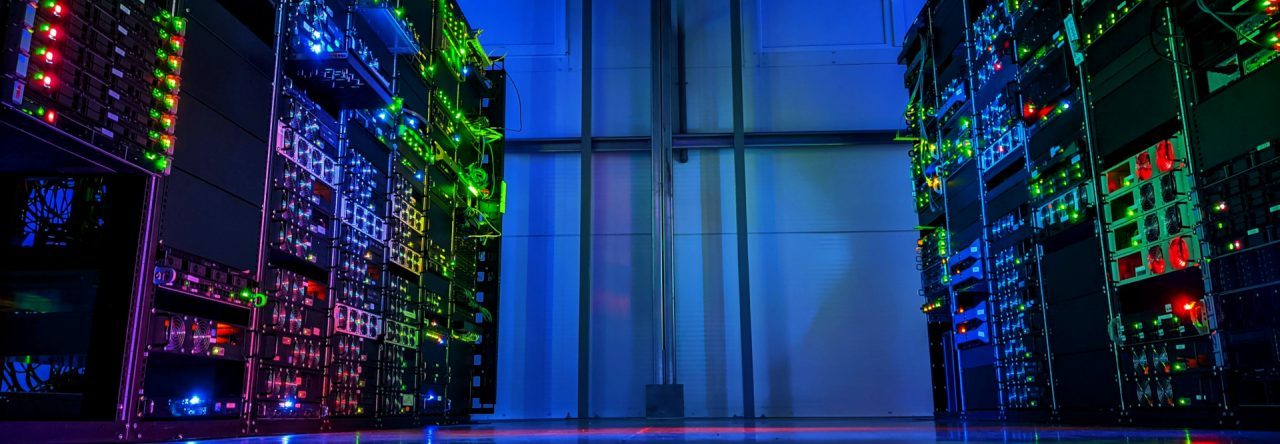
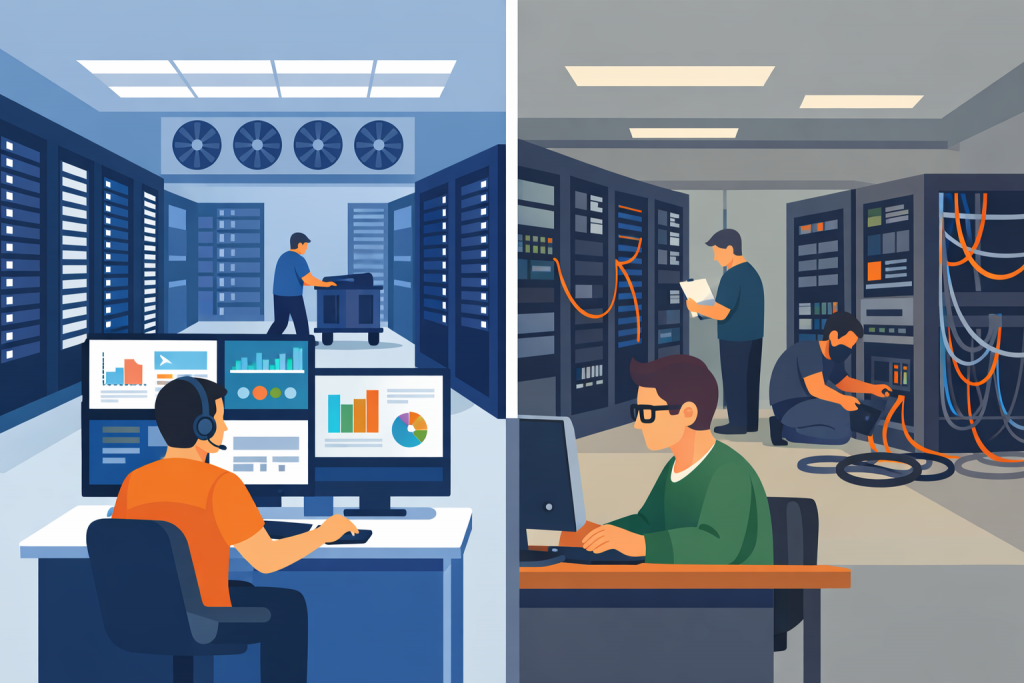
A data center is a specialized facility or a complex of buildings where servers, networking equipment, and data storage systems are located. This is where websites, online services, cloud platforms, and internal corporate systems operate. To ensure uninterrupted operation, data centers are equipped with backup power supplies, cooling systems, fire suppression, and physical security. At first glance, all data centers may seem similar, but in terms of purpose and usage model they differ significantly. Most often, the distinction is made between commercial and corporate data centers, which perform different tasks and are built according to different principles.
A Commercial Data Center as a Business Service
A commercial data center is created as a service. Its main purpose is to provide infrastructure for rent to third-party clients. Such data centers host servers for hosting providers, large companies, startups, and any organizations for which using ready-made infrastructure is more efficient than building their own. A client can rent a physical server, a virtual server, or simply space in a rack — this is known as colocation, meaning the placement of one’s own equipment in someone else’s data center.
For users, a commercial data center primarily offers predictability. Loads are calculated in advance, there are redundant internet connections, diesel generators in case of power outages, and round-the-clock technical staff. Clients do not need to understand building engineering or power systems — they pay for a ready result: stable operation of their services.
A Corporate Data Center as an Internal Resource
A corporate data center is built to serve the needs of a single specific company. It is not rented out and is not used to serve external clients. Such a data center is part of the company’s internal infrastructure and operates exclusively for its tasks: accounting systems, internal portals, CRM systems, analytics platforms, or production systems.
The key feature of a corporate data center is full control. The company itself defines the level of security, access policies, equipment upgrades, and software updates. This is especially important for organizations that work with sensitive data or have strict regulatory compliance requirements. At the same time, maintaining such a data center requires significant expenses: investments in premises, engineering systems, staff, and ongoing maintenance.
Differences in Costs and Scalability
One of the main differences between commercial and corporate data centers lies in economics. A commercial data center allows companies to pay only for the resources they actually use. If a project grows, capacity can be increased quickly. If the load decreases, costs can be easily optimized. This is particularly important for online businesses where demand can change very rapidly.
A corporate data center, on the other hand, requires substantial upfront investment. It is built with capacity reserves for future needs, but those reserves are not always fully utilized. Scaling is more complex: adding capacity requires purchasing new equipment, upgrading cooling and power systems, and sometimes even expanding the building itself.
Approaches to Security and Reliability
Both commercial and corporate data centers place a strong emphasis on security, but their approaches differ. In commercial data centers, security is standardized. Proven, typical solutions are used: card-based access control, video surveillance, physical security, and multi-level power protection. Such data centers often hold certifications that confirm their reliability and compliance with international standards.
In corporate data centers, security is more customized. A company may implement its own rules, restrict access to a very limited group of employees, or integrate the data center with internal control systems. This provides flexibility but also increases responsibility: overall reliability depends entirely on the company’s internal expertise.
Why Businesses Increasingly Choose Commercial Data Centers
Modern businesses are increasingly less likely to build their own data centers from scratch. The reason is simple: commercial data centers allow companies to focus on their core activities rather than maintaining complex infrastructure. For most organizations, speed of deployment, stability, and predictable costs matter more than owning a server room.
Corporate data centers remain relevant for large organizations with specific requirements, but even they increasingly combine their own infrastructure with commercial solutions. As a result, the choice between a commercial and a corporate data center is not a matter of “better or worse,” but rather a question of scale, business objectives, and the willingness to take on engineering and financial responsibility for operating the digital environment.
Leave a Reply
You must be logged in to post a comment.