
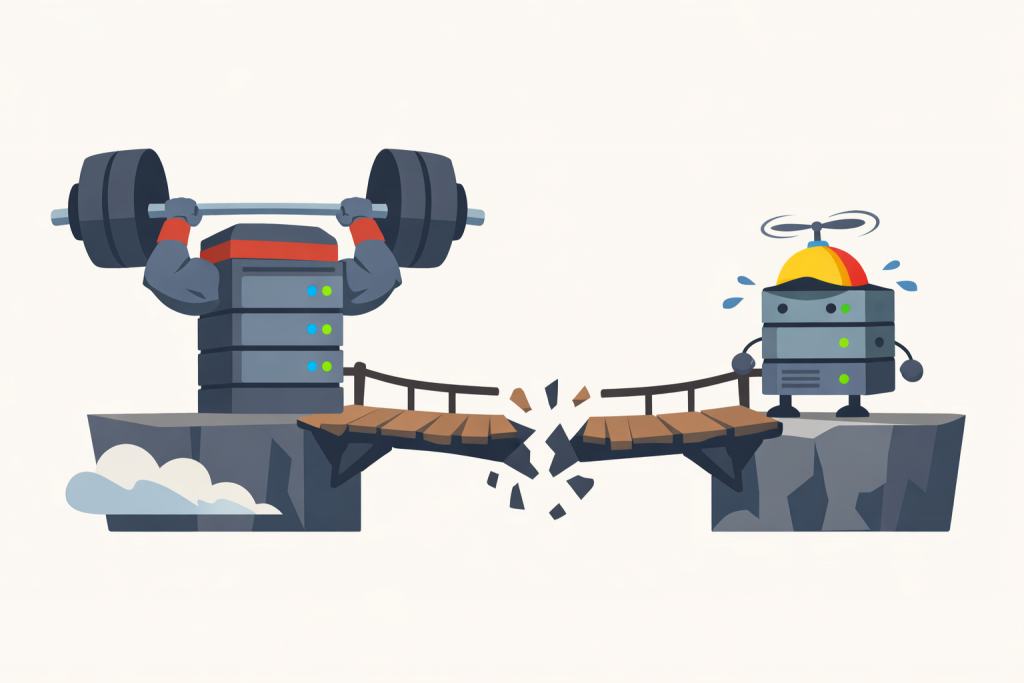
Many VPS users perceive a plan as a conditional “package” of services that can be freely increased or decreased depending on their needs. Upgrading a plan usually causes no issues: more resources mean more possibilities. However, when it comes to switching to a lower plan, clients often face a refusal and do not understand why the provider cannot simply “reduce” the server. In reality, this impossibility has not a commercial but a purely technical nature, related to how virtualization and server infrastructure work.
How a VPS Works and What a Plan Means in Practice
A VPS is a virtual server that runs on a physical server together with other VPS instances. Each such server is allocated a fixed set of resources: the amount of RAM, the number of CPU cores, disk space, and certain performance limits. These resources are reserved by the virtualization system at the moment the VPS is created. In this case, a plan is not just a number in the billing system but a specific technical configuration закрепed to the server at the hypervisor level. A hypervisor is special software that manages the distribution of resources between all virtual servers on a physical host.
Why Resources Cannot Simply Be “Taken Back”
When a VPS is created or upgraded, the system allocates a certain amount of resources to it and builds its internal structure based on these parameters. For example, disk space is formed as a separate logical volume or a file of a fixed size. If the user has already placed data, databases, backups, or system files on the disk, physically reducing this volume without the risk of data loss is impossible. The same applies to RAM and CPU resources: the operating system inside the VPS “gets used to” a specific configuration, and reducing it can lead to unstable operation or a complete server shutdown.
The Impact of Downgrading on Operational Stability
Downgrading a plan means reducing the available resources. If the server is already operating under a certain load, lowering the limits can cause serious problems. Websites may start loading slowly, services may crash unexpectedly, and the operating system may respond incorrectly to requests. For the provider, this means an increase in failures, support requests, and overall infrastructure instability. That is why responsible hosting providers do not allow scenarios that could potentially break a client’s working server.
Infrastructure-Level Limitations
The physical server on which VPS instances run is designed for a specific resource allocation scheme. When a client upgrades a plan, the system simply allocates additional resources from the reserve. But downgrading would require rebuilding the entire VPS configuration or even recreating it from scratch. This would mean stopping the server, migrating data, checking compatibility, and reconfiguring the system. In essence, this is no longer a “plan change” but a full migration to another server with a new configuration.
Why Recreating a VPS Is Not an Automatic Process
Theoretically, switching to a lower plan is only possible by creating a new VPS with fewer resources and transferring data to it. However, such a process is always associated with risks. Not all data is transferred without errors, not all services start correctly on the first attempt, and some settings depend on the specific server configuration. For the user, this means downtime, possible disruptions, and additional time costs. That is why providers do not offer automatic “plan downgrades” and recommend choosing a configuration with a margin from the start.
Why Upgrading a Plan Is Normal Practice While Downgrading Is Not
VPS architecture is designed to scale up easily, but not down. Adding resources does not disrupt the server’s logic, while reducing them can destroy an already configured system. This is a fundamental principle used not only in VPS environments but also in cloud services, databases, and corporate IT systems. Therefore, the inability to switch to a lower plan is not a restriction imposed “by the provider’s will” but an objective technical reality.
How to Approach Choosing a VPS Plan Correctly
Understanding these technical nuances helps avoid mistakes at the start. A VPS is a tool for project growth, and its resources should meet not only current but also future needs. When choosing a plan, it is worth building in a reserve and understanding that growth is a normal path for any online project. That is why most providers guide clients toward safe upward scaling rather than risky attempts to reduce already allocated resources.
Leave a Reply
You must be logged in to post a comment.