Month: January 2026

How Artificial Intelligence Is Gradually Replacing Familiar Software

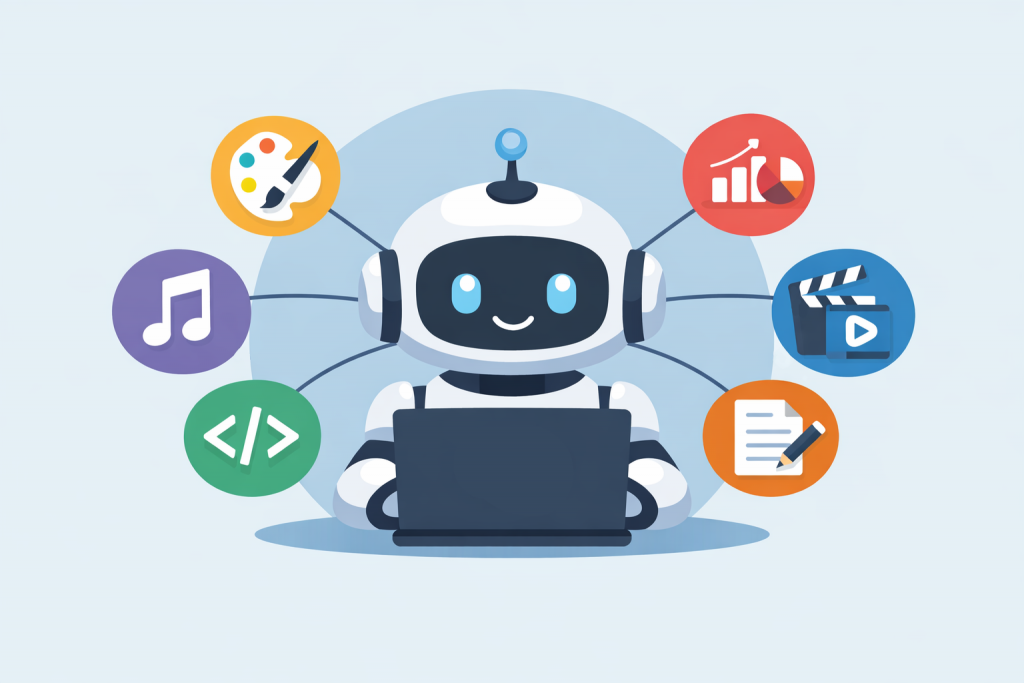
An artificial intelligence robot works at a laptop, surrounded by icons of code, music, design, video, analytics, and copywriting, symbolizing various digital tasks.
Universalization of tools as a new stage in the development of digital services

Just a few years ago, the digital lives of most people consisted of dozens of separate applications. Asana or Monday were used for task planning, GitLab for working with code, Wix for building websites, Duolingo for online learning, and specialized support platforms for working with clients. Each program performed a narrow function, and this was considered a normal model of computer use. Today, this logic is gradually changing. Artificial intelligence is taking over more and more tasks that previously required separate programs, and it does so within a single universal environment.

When Saving on Servers Becomes a Strategic Mistake

A man in business attire sits on the floor with a depressed look next to a server rack from which smoke is coming, a graph with falling indicators is shown on the wall behind him.
Consequences of technical decisions made with a focus only on short-term benefits

At the start of any project, the desire to save money seems logical. The business has not yet begun to generate stable income, the load is low, and the server appears to be just a technical background element that does not directly affect sales. That is why many companies choose the cheapest server solutions or minimal configurations “for now.” The problem is that a server is not a one-time purchase but the foundation of a digital business. Mistakes made at this stage rarely show up immediately, but they almost always become apparent when the project begins to grow.

Physical Artificial Intelligence as a New Stage of Technological Development

An autonomous taxi with a robot driver at the wheel is driving along a city road, with houses, pedestrians, and city infrastructure depicted nearby.
When digital systems begin to interact with the environment without human intervention

Until recently, artificial intelligence was perceived mainly as a software technology. It analyzed texts and images, helped with information search, or automated routine digital tasks. Today, however, AI is rapidly moving beyond screens and beginning to operate in the physical world. This shift became clearly visible after recent statements at technology exhibitions, where it was demonstrated that artificial intelligence is transitioning from a supporting tool to an active participant in real-world processes.

What Is an API and Why It Exists in Almost Every Service

Illustration of a waiter with the inscription API taking an order from a user at a table and passing it to the kitchen with the inscription Server.
API as a universal way of interaction between different parts of a service

API stands for Application Programming Interface, which is a software interface for interaction between different systems. Simply put, an API is a set of clear rules that allow one program to communicate with another, send a request, and receive a response. End users usually do not see APIs and rarely think about their existence, yet they use them constantly. Logging in with Google, paying by card on a website, displaying the weather, exchange rates, or delivery status — all of this works thanks to APIs.

Programmers’ Day Becomes an Official Holiday in Ukraine

Programmer's workplace with computer, code on screen and digital infrastructure elements.
Official recognition of the professional day of software development specialists

On January 7, Ukraine celebrates Programmers’ Day at the state level for the first time. This is a new professional holiday that received official status at the end of last year and is dedicated to specialists in the field of information technology. Its introduction became a logical step given the role of the IT industry in the country’s modern life and its impact on the economy, security, and the development of digital services.

For Which Tasks a Dedicated Server Is an Excessive Solution

A stationary server next to a laptop on a table, a simple game running on the laptop screen, a cup and a houseplant nearby.
Comparing powerful server hardware with simple tasks

A dedicated server is often perceived as a universal solution for any online project. It is associated with maximum reliability, full control, and performance headroom “for growth.” However, in practice there are many situations where such infrastructure is excessive. In these cases, it does not provide real advantages but instead creates additional costs, complicates administration, and can even slow down project development.

Page 2 of 2

-->