Just a few decades ago, data transfer was a secondary characteristic of technology. Users were more concerned with whether a device could connect to a computer at all and whether files could be copied without errors. Today, the situation is completely different. Data transfer speed has become one of the key factors defining the capabilities of smartphones, laptops, televisions, and even everyday accessories. It affects how fast a device charges, what video quality it can play, and how comfortable it is to work with large volumes of information.
Why Data Speed Is No Longer Just a Technical Detail
For most users, megabits and gigabits per second seem like abstract numbers. However, they translate into very tangible experiences. Faster data transfer means instant copying of large files, stable playback of high-resolution video, and smooth work with cloud services without delays. Thanks to increasing speeds, widespread use of 4K and 8K video, game streaming, remote work with heavy projects, and photo and video editing without local storage have all become possible.
New Content Formats and Pressure on Interfaces
Modern devices are no longer limited to text and images. High-frame-rate video, immersive audio, augmented reality, and virtual reality require enormous amounts of data. Older interfaces are gradually becoming unable to handle such demands. Even if the processor and memory are powerful enough, the real bottleneck often turns out to be the data transfer channel between devices.
The GPMI News as a Signal of Change
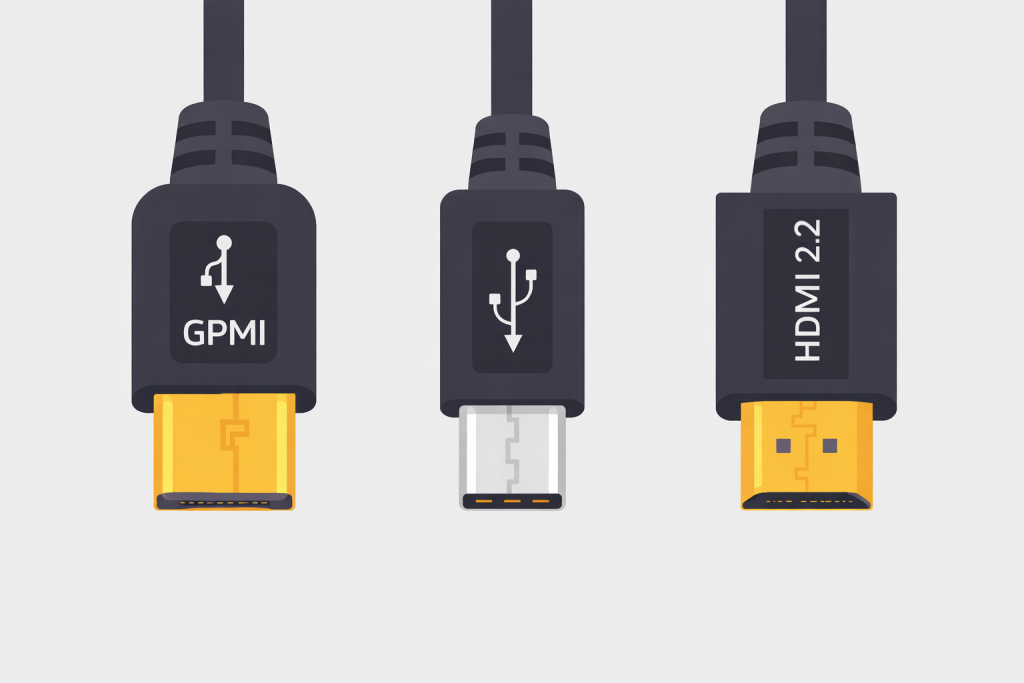
Against this background, a recent news story from China is particularly telling. The country has officially approved a new interface standard called GPMI, which is being positioned as a potential competitor to USB-C and HDMI. According to its stated specifications, GPMI supports bandwidths of up to 192 Gbit/s, significantly exceeding the capabilities of most existing connection standards. This is not an experimental technology, but an approved standard planned for use in smartphones, laptops, televisions, monitors, and other consumer electronics. This indicates that the evolution of data transfer speeds is entering a new phase, one that is already taking shape beyond the familiar solutions used in many markets today.
How This Will Affect Everyday Devices
Higher bandwidth opens up possibilities that once seemed excessive. A single cable can simultaneously transmit ultra-high-resolution video, audio, data, and power without compromising quality. For users, this means fewer cables, simpler connections, and more stable operation. At the same time, manufacturers gain greater freedom in device design, as they no longer need to juggle multiple ports with different limitations.
The Connection to the Development of Servers and Data Centers
The growth of data transfer speeds is not limited to consumer electronics. The same trends are strongly influencing server infrastructure and data centers. Cloud services, artificial intelligence, and big data analytics require instant data exchange between servers, storage systems, and networking equipment. The faster data can be transmitted, the more efficiently computing resources are used and the fewer delays are experienced by end users.
Why Cables Are Not Disappearing Despite Wireless Technologies
The popularity of wireless solutions may create the illusion that cables will soon become unnecessary. In reality, the opposite is true. Wired interfaces provide maximum stability, speed, and predictability. That is why increasing data transfer speeds through cable standards does not contradict the development of wireless technologies but complements them, covering scenarios where maximum performance is essential.
Conclusion: Speed as the Foundation of Future Capabilities
The ongoing growth of data transfer speeds is gradually reshaping the very way devices are used. The world is moving from local files and limited connections toward constant, seamless information exchange without delays or quality loss. News such as the approval of the GPMI standard only reinforces this trend. Speed is no longer a dry technical specification; it is becoming the foundation on which new services, content formats, and user experiences are built.
Leave a Reply
You must be logged in to post a comment.