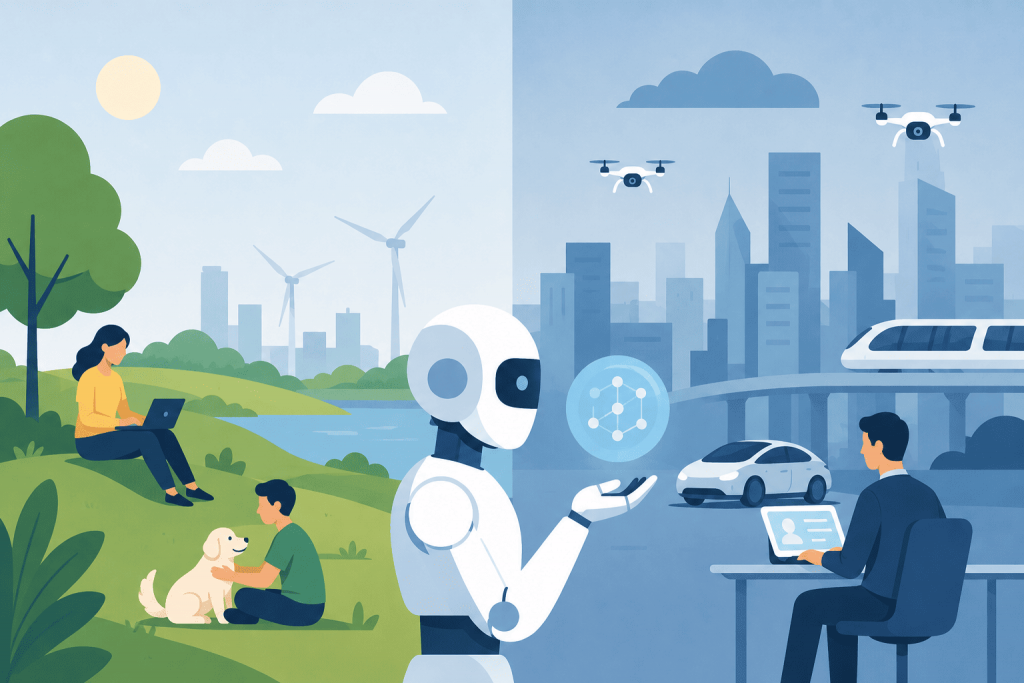
We didn’t even notice how artificial intelligence stopped being some futuristic toy. Now it’s just part of the software we use every day. When your email suggests how to finish a sentence for you or a service automatically removes noise from a voice recording, you are already inside an ecosystem of algorithms. It’s convenient. Many websites now generate product descriptions or news faster than a person can even open the page, and that frees up a huge amount of time for tasks that actually matter. AI has affected everything: from the way we search for information to the stock value of industry giants. This is no longer about chatbots, but about a new logic of how the digital world works, where routine gradually disappears.
The reality of creative and intellectual work
The market is adapting to new speeds. Of course, professions where mechanical work used to be valued – translators of simple texts or designers of typical banners – are having a hard time. Algorithms work in seconds, and for many businesses this became a kind of salvation.
But there is another side to it. Specialists finally got rid of the “fear of the blank page.” You no longer spend hours just trying to begin. AI throws together a draft, and you, like an architect or editor, bring it to its final form. This raises the bar for professionalism: now what matters is not simply the ability to “do,” but the ability to guide and see the final result. Questions of ethics and training models on other people’s work remain open, but at the same time this pushes people to create unique content that machines still cannot truly reproduce.
The technical side of the issue: hardware and resources
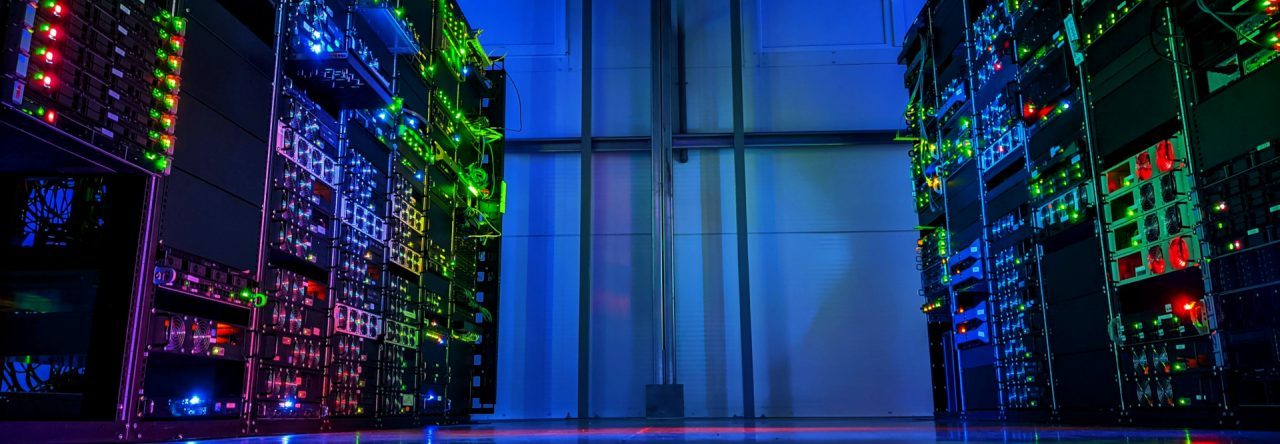
Behind every easy request in a chat window stands colossal infrastructure. The modern internet has started demanding resources that once seemed almost фантастичними. Models require specialized graphics accelerators and enormous facilities – data centers. It is there, in the constant hum of servers, that answers to our questions are born and complex ideas are generated.
The scale of investment is staggering. Technology corporations such as Google and Microsoft are directing around 750 billion dollars into infrastructure this year. This is no longer just spending, but the construction of a new foundation for the global network. That kind of rebuilding makes it possible to create services that would have been technically impossible only yesterday.
Clouds as the new foundation
Cloud services used to be just a place for backups. Today they are the only way to get enough power for serious tasks. Since the calculations happen not on your laptop but somewhere in a remote facility, companies have started fighting aggressively for server time.
We are seeing deals worth hundreds of billions that look more like investments in the future. Google Cloud, Anthropic and other players are effectively creating an environment where small businesses can gain access to the same technologies as corporations. To some extent, this democratizes complex technologies.
Market games and capitalization
Stock market analysts are now evaluating companies not only by today’s profits, but also by their technological reserves. The value of a business now directly depends on how well it is supplied with its own hardware and intellectual code.
Competition between Nvidia, Microsoft and Amazon has turned into a race for leadership in a new world. Google recently managed to move ahead in capitalization, and that shows how high the stakes have become. Money flows to where real value is being created.
The new normal
We got used to change faster than expected. What looked like magic yesterday is now built into every smartphone as a standard feature. AI really does remove routine work, opening space for more complicated and interesting tasks. Of course, this increases dependence on the infrastructure of major players, but at the same time it gives people tools they could once only dream about. The process has reached scales too large to stop, and it is unlikely anyone truly wants to stop it anyway. We are simply learning how to live inside a system where technology has finally started operating at full capacity.