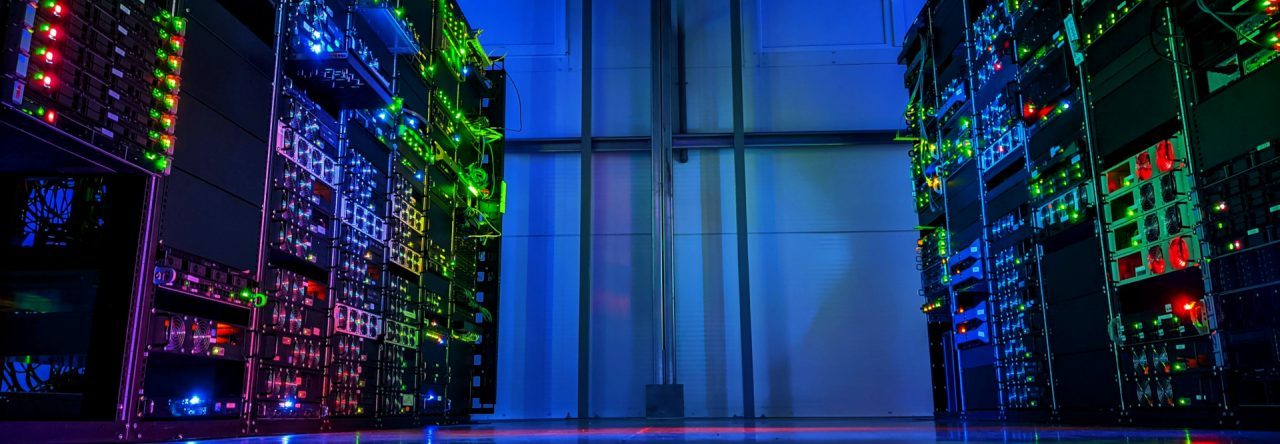
For Tier-1 companies, the question of renting servers is usually settled already at the stage of entering the global market. When the count goes into millions of requests per second, depending on a third-party provider is not only expensive because of the intermediary margin, but also risky from the SLA perspective. That is why proprietary data centers (DCs) have become a core asset for industry leaders. This makes it possible to “tailor” infrastructure to specific tasks: from custom racks to proprietary cooling systems that save megawatts of energy.
Google: infrastructure around PUE
Google давно stopped being just a search engine, turning into an engineering company that builds networks. Their facilities in North America, Europe, and Asia are not simply warehouses with servers, but testing grounds for energy efficiency. They design their own server boards and heat dissipation systems, because at such scale standard hardware simply cannot cope or ends up “eating” the entire electricity budget. Their own network allows them to maintain minimal latency for YouTube or Maps, even when backbone routes are overloaded.
AWS and the logic of regions
Amazon, through its AWS division, effectively set the standard for what modern clouds should look like. Their strategy is based on strict separation into regions and Availability Zones. This allows Amazon to build hundreds of facilities across the world, guaranteeing customers that even if power “drops” in one data center, a neighboring one will take over the load without interrupting the session. This is a level of autonomy that cannot simply be purchased as a service from another provider.
Azure: localization and hard security
Microsoft is forced to build its own capacity also because of legal pressure. Many countries require that citizens’ data be physically located within their territory (Data Residency). Proprietary data centers allow Microsoft Azure to enter markets where compliance with regulatory norms is critical for the public sector or banks. In addition, full control over the facility perimeter is the only real way to guarantee cybersecurity at the physical level.
Meta: optimization for media traffic
For Meta (Facebook, Instagram), the main headache is delivering heavy content. When millions of people stream video simultaneously, third-party CDNs may simply not cope. Their own network of data centers allows the company to build the shortest possible traffic routes. They were also among the first to start moving their facilities to renewable energy, without waiting for landlords to do it, which significantly improves their sustainability reporting.
Apple and the iCloud ecosystem
Apple has always taken a closed approach, and the server side is no exception. To ensure that iCloud, the App Store, and Apple Music work seamlessly with devices, the company invests billions in its own “physical layer.” The key focus here is privacy: Apple needs to know that no third-party software is installed on the server that could compromise user data.
The price of independence
Building from scratch means colossal capital expenditures. Design, high-voltage grid connections, diesel generators for backup – all of this turns into complex engineering quests. But for global players it is the only way to ensure scalability. When a service grows, it is easier to deliver a new rack into your own hall than to wait for a landlord to expand their facilities. As a result, the user gets stable email or online banking without even thinking about how many thousands of servers are currently working for that single click.
Leave a Reply
You must be logged in to post a comment.