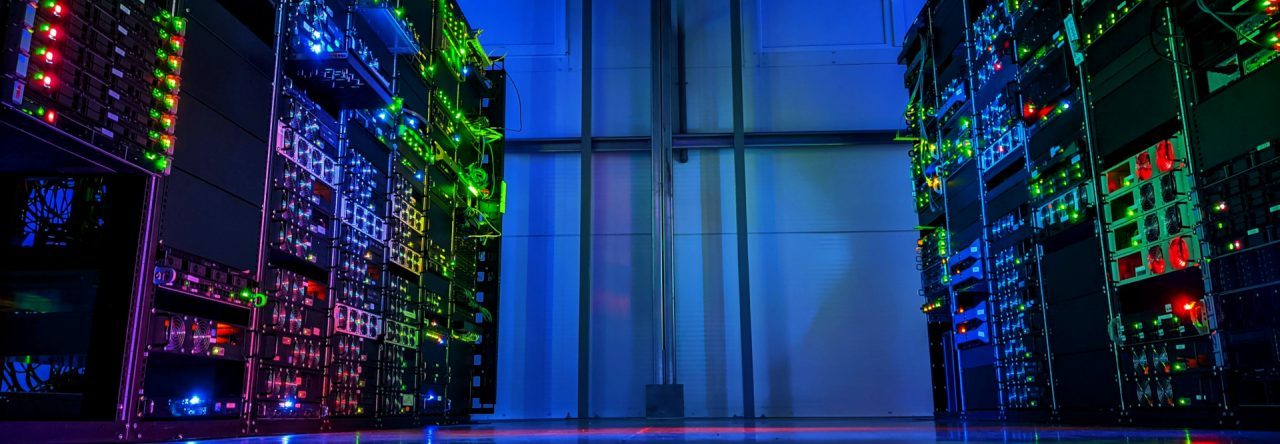
Once, the physical security of a data center seemed straightforward and even linear: a solid door, a strict guard at the post, and a few cameras were enough. Back then, that was completely sufficient, because the facilities themselves were smaller, and their role was not as critical. Today, however, a data center is the “heart” of business and banking systems, so the approach to protection has changed. It is no longer enough to simply keep outsiders behind closed doors. It becomes important to see every corner of the site in real time, react instantly to the slightest deviations in equipment operation, and eliminate risks before they turn into a real incident.
From a Guard at the Entrance to Layered Protection
The evolution of physical security in data centers clearly shows how the industry itself has changed. In the early stages, the main task was to restrict access to the premises. Then came the next level: dividing protection into several layers. First, the perimeter is secured, then the building entrance, then access to specific zones, server halls, and even individual cages or cabinets with a client’s equipment. In large modern data centers, this approach has already become standard: round-the-clock security posts, video surveillance, biometric readers, and so-called mantrap zones are used – small control vestibules with two doors, where one will not open until the other is closed. This setup prevents someone from slipping in behind another person and significantly complicates unauthorized access. Equinix, for example, directly describes five control points for authorized visitors, including 24/7 security, mantrap gateways, and biometrics.
Why Old Methods Are No Longer Enough
The reason for these changes is simple: a modern data center has become too large, too expensive, and too important to rely solely on human observation. Physical security now covers not only intrusion, but everything that can lead to downtime. This includes overheating, water leaks, cooling issues, suspicious activity near the perimeter, and any small detail that at the wrong moment turns into a service outage. That is why the current approach is increasingly called “layered” or “defense in depth”: it combines people, procedures, sensors, automated access control, and continuous monitoring. IBM also describes physical security as a combination of site protection, access control, round-the-clock surveillance, and incident prevention systems. In other words, today it is no longer about a single level of protection, but about an entire system where each layer backs up another.
Robotic Dogs as a New Stage of Physical Security
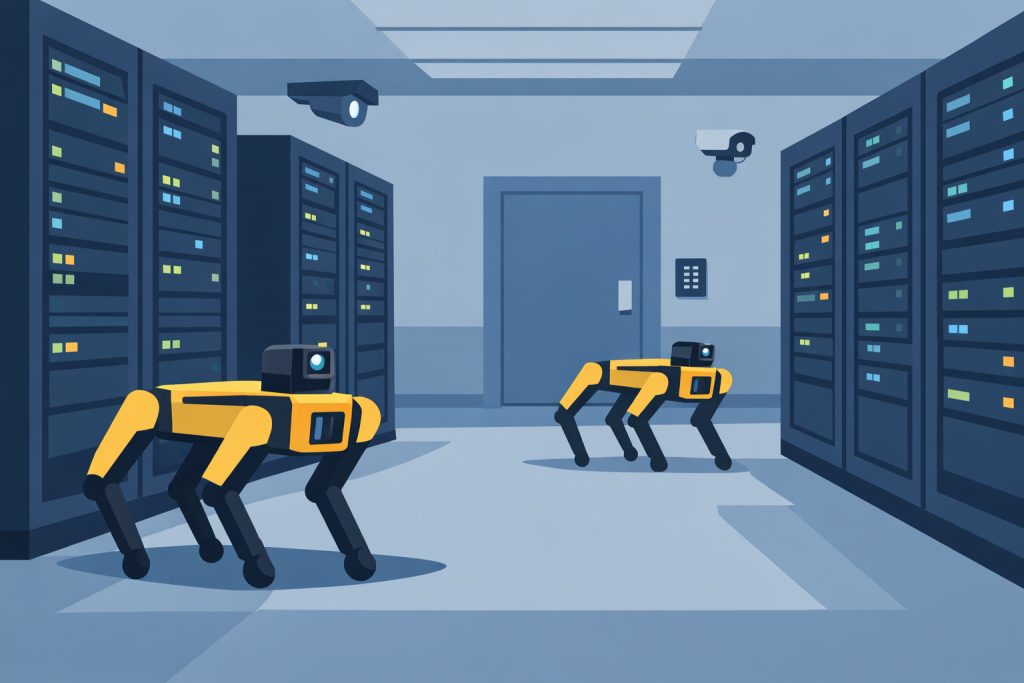
Against this background, Boston Dynamics and Ghost Robotics are promoting quadruped robots for data center security. This is not an experiment “for show”, but a very practical scenario. According to Business Insider, data center operators have begun using such robots for patrolling территории, monitoring the perimeter, inspecting equipment, and detecting issues before they turn into costly failures. A Boston Dynamics representative, Merri Frain, directly noted that the company has seen a very noticeable increase in interest from data centers over the past year. This is logical: AI infrastructure is rapidly expanding, sites are occupying increasingly large areas, and requirements for uninterrupted operation do not decrease, day or night.
What is most interesting here is not even that a “robot dog” is working on-site, but what tasks it is assigned. These machines can follow routes without fatigue, see in the dark using thermal imaging, use 360-degree cameras, detect puddles, leaks, temperature anomalies, and other deviations. In fact, they combine the functions of a mobile patrol and an engineering environment inspector. For a data center, this is critical, because losses often arise not from a loud event, but from a small issue that was not noticed in time. Publications on this topic note that Spot from Boston Dynamics can cost roughly from 175 to 300 thousand dollars depending on configuration, Vision 60 from Ghost Robotics – from 165 thousand, but manufacturers claim that due to continuous operation and a wide set of capabilities, the payback period for clients can fit within about two years.
What This Means for Data Centers and Clients
All of this clearly shows the main shift. Previously, the physical security of a data center meant “not letting the wrong people in”. Now it also means “not missing anything”. That is why, alongside guards, cameras, biometrics, and access шлюзы, autonomous mobile systems are appearing – systems that do not just stand at a post, but continuously collect data about the state of the facility. For a client, this matters even when it is not visible directly. If a website, VPS, or dedicated server is hosted in a data center where physical protection operates on multiple levels and is complemented by automated control, it means fewer chances of downtime due to human error, delayed response, or an unnoticed technical issue. And this is exactly how the new physical security differs from the old one: it is no longer limited to guarding doors. It becomes part of the overall reliability of the entire digital infrastructure.